The value of robotic esophageal surgery depends on more than smaller incisions or access to a robotic platform. By the end, you will know how the operation works, when it is appropriate, which outcomes to compare, and what to ask a GI oncosurgeon before choosing a treatment team.
Key takeaways
- Ask how robotic, laparoscopic, and open approaches compare for your tumour.
- Compare complications, margins, lymph-node removal, recovery, and conversion rates.
- Bring biopsy, endoscopy, scan, and pathology reports to your consultation.
- Choose a GI oncosurgeon and hospital with appropriate esophageal surgery experience.
What Robotic Esophageal Surgery Actually Involves
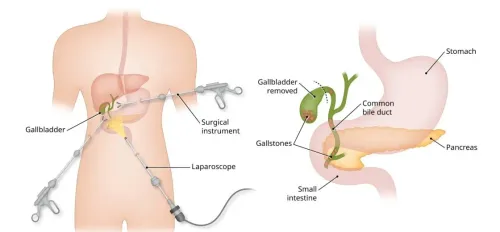
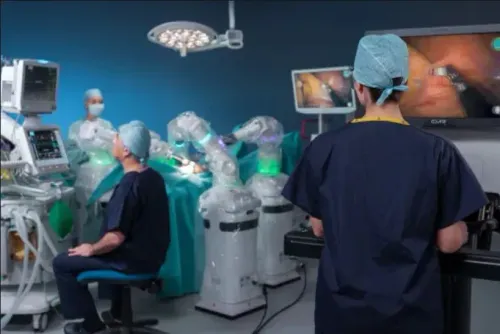
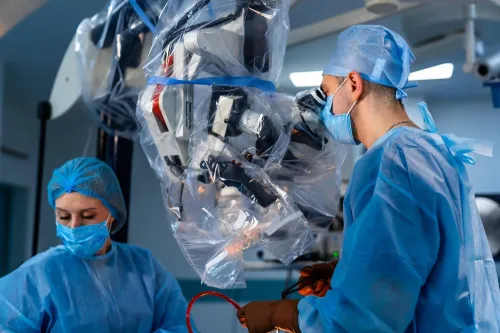
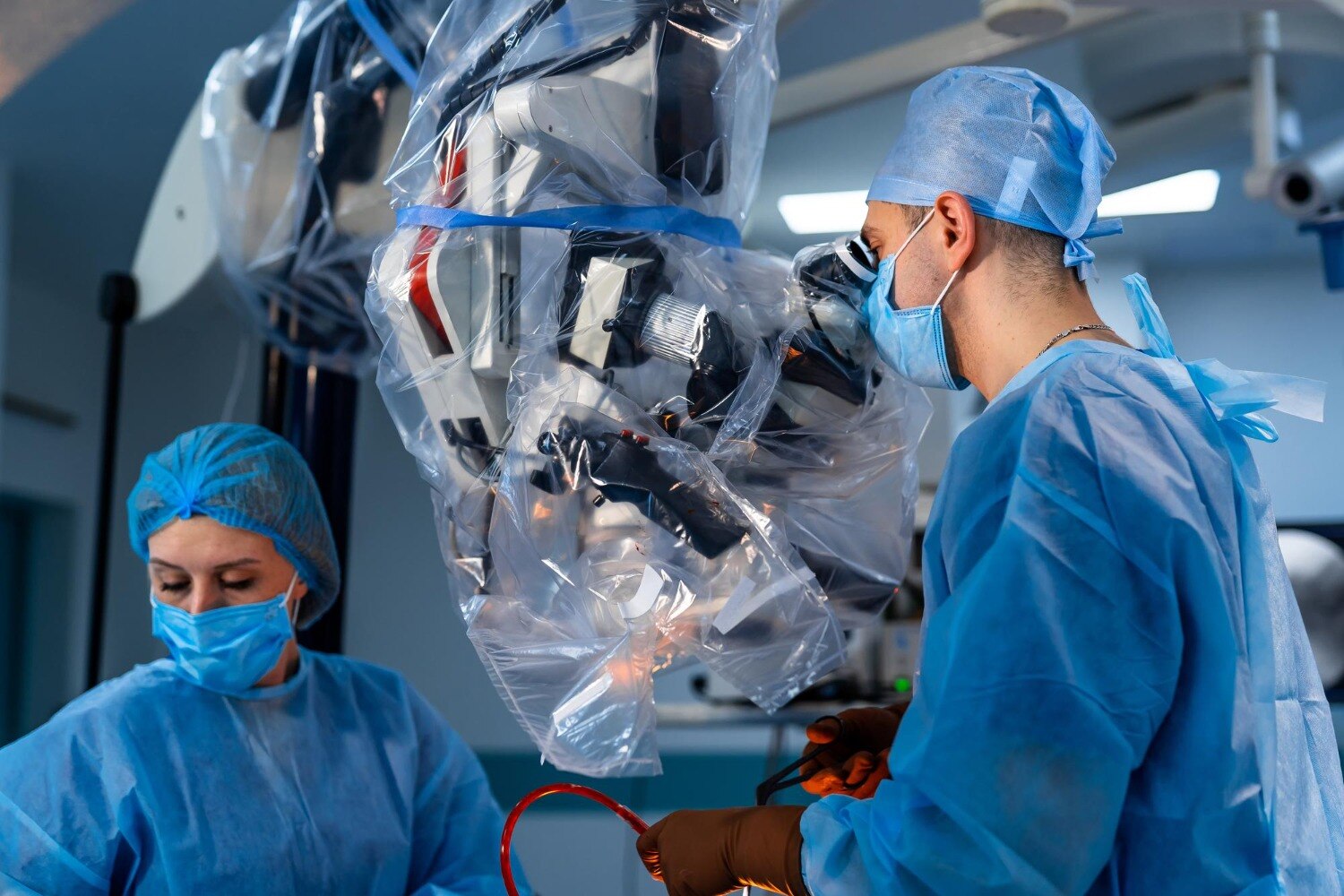
Robotic esophageal surgery is a minimally invasive esophagectomy performed through small ports in the abdomen and chest. The surgeon sits at a console and controls the robotic instruments; the robot does not make decisions or operate independently.
Under general anaesthesia, the operation can involve:
- Freeing the stomach from surrounding tissues
- Removing the diseased section of the esophagus
- Removing nearby lymph nodes for cancer staging and treatment
- Rebuilding the digestive passage
In many cases, the surgeon shapes the stomach into a narrow tube and brings it upward into the chest or neck to join the remaining esophagus. Some operations also require a separate incision in the neck. If the stomach cannot be used, another section of intestine may be considered.
Small access wounds do not make this minor surgery. The procedure involves work in both the chest and abdomen, takes place under general anaesthesia, and requires a hospital admission. You may need temporary changes to eating, a feeding tube, and support to relearn safe swallowing.
Intensive-care monitoring is also possible, especially after a long or complex operation.
The robotic platform can improve instrument control in the confined chest, but it does not replace surgical judgment, cancer planning, anaesthesia, critical care, or postoperative nutrition and swallowing support. Robotic esophageal surgery describes how the surgeon reaches the organs, not a different cancer biology or an automatic guarantee of easier recovery.
When Is Robotic Surgery Worth Choosing Over the Alternatives?
Robotic esophageal surgery is worth considering when the tumour can be completely removed, its location permits the planned route, you can tolerate a long anaesthetic, and the hospital performs esophagectomy regularly. The robot is not the deciding factor; cancer stage, histology, lymph-node involvement, and the treatment sequence come first.
| Option | Main advantage | When it applies |
|---|---|---|
| Robotic esophagectomy | Minimally invasive access with precise instrument control | Resectable disease, suitable anatomy, adequate heart and lung function, and an experienced team |
| Open esophagectomy | Immediate wide exposure and direct control | Extensive invasion, dense adhesions, previous operations, bulky tumours, or safer conversion |
| Laparoscopic or thoracoscopic surgery | Minimally invasive access without a robotic platform | The team achieves strong esophagectomy outcomes without robotic assistance |
| Non-surgical treatment | Treats cancer or symptoms without resection | Chemotherapy, chemoradiotherapy, endoscopic treatment, or symptom-focused care fits the histology, stage, fitness, or goals |
Adenocarcinoma and squamous-cell carcinoma can require different chemotherapy or chemoradiotherapy plans. Enlarged nodes, poor response to preoperative treatment, malnutrition, weak lung or heart function, and previous chest or abdominal surgery can shift the recommendation. Surgery is not automatically the first treatment after diagnosis.
Choose another approach when emergency perforation needs urgent open control, anaesthetic risk is unacceptable, the tumour cannot be safely reached or removed, or conversion to open surgery improves cancer or patient safety. If you search “gi oncosurgeon robotic esophageal surgery for nelamangala,” compare the team’s esophagectomy experience and results, not the equipment label.
Which Results Should You Compare Before Saying It Is Better?
A robotic operation is worth choosing only if its measured results beat the alternatives for patients like you. Randomized evidence, including the ROBOT trial, supports minimally invasive esophagectomy for reducing some postoperative morbidity compared with open transthoracic surgery. Robotic-specific evidence remains smaller, so no programme gets a guaranteed advantage.
| Result to compare | Question for the team | Why it matters |
|---|---|---|
| Postoperative recovery | What are your rates of incision-related pain, pneumonia, respiratory failure, atrial fibrillation, hospital stay, and time to normal activity? | Smaller incisions do not prevent chest complications or prolonged recovery. |
| Surgical safety | How often do you see anastomotic leak, conduit ischemia, bleeding, chyle leak, recurrent-laryngeal-nerve injury, narrowing at the new connection, reoperation, readmission, ICU admission, and 30-day mortality? | These complications can follow a technically successful operation. |
| Cancer quality | What margin and lymph-node dissection do you target, how often are cases converted to open surgery, and are indicated perioperative treatments completed on schedule? | Cancer control depends on resection quality and treatment timing, not incision size. |
Ask for the hospital’s own figures, reported with Esophageal Complications Consensus Group definitions, rather than accepting “minimally invasive” as proof. Compare operating time and conversion rates too: docking difficulties, equipment cost, dense adhesions, prior chest surgery, and bulky tumours can erase expected benefits.
Expertise, honest data, and a capable GI oncosurgeon matter more than the robot’s presence.
What Happens During an Esophageal Surgery Consultation?
A serious esophageal surgery consultation establishes the diagnosis, stage, fitness, and treatment sequence before anyone books an operation. The GI oncosurgeon Nelamangala should review the original endoscopy images and biopsy report, confirm the histology, and assess contrast CT scans of the chest and abdomen.
1. Confirm staging. Discuss PET-CT when distant disease assessment could change treatment. Endoscopic ultrasound can define tumour depth and regional lymph-node involvement when its findings will alter management.
2. Assess nutrition and daily function. Record weight loss, swallowing difficulty, albumin and other nutrition concerns, smoking status, and exercise tolerance. Decide whether you need dietitian input or feeding access before treatment.
3. Check operative fitness. Pulmonary function testing and cardiac evaluation help determine whether you can tolerate a long chest operation and general anaesthesia. Ask about respiratory exercises and smoking cessation.
4. Request team review. The multidisciplinary group may include the GI oncosurgeon, medical oncologist, radiation oncologist, radiologist, pathologist, anaesthetist, intensivist, dietitian, and endoscopy team.
5. Clarify treatment order. Ask whether chemotherapy or chemoradiotherapy comes first, how response will be assessed, and what happens if scans show progression or new spread.
6. Understand recovery. Discuss the reconstruction route, likely feeding plan, expected swallowing changes, warning signs after discharge, and the exact location for emergency review.
The goal is a coordinated treatment plan, not merely a booking for robotic esophageal surgery.
How to Choose a GI Oncosurgeon and Hospital Near Nelamangala
A safe choice near Nelamangala starts with verified esophageal experience, not a search ranking. If you search “gi oncosurgeon nelamangala” or “gi oncosurgeon robotic esophageal surgery for nelamangala,” confirm these details before booking:
- The surgeon’s full name, medical registration, specialty training, current hospital, and number of esophagectomies performed each year.
- The hospital’s annual esophagectomy volume, robotic case count, conversion-to-open rate, typical length of stay, and complication rates using a defined standard such as Esophageal Complications Consensus Group definitions.
- The availability of thoracic anaesthesia, a trained ICU, interventional radiology, endoscopy, oncology, dietetics, and experienced nursing support.
| Check | Verify | Why it matters |
|---|---|---|
| Surgeon | Procedure-specific esophagectomy experience | Robotic colorectal or bariatric work does not prove esophageal expertise |
| Hospital | ICU, endoscopy, imaging, oncology and emergency cover | Complications need rapid treatment |
| Location | Operation, follow-up and urgent review sites | Travel becomes difficult after major surgery |
The phrase “dr santosh esophageal surgeon” does not identify one clinician. Confirm the doctor’s complete identity, registration and current affiliation before relying on any listing.
Ask where to go for fever, breathlessness, vomiting, inability to swallow, bleeding or wound problems. Robotic Cancer Surgery is worth considering only when its consultation provides this verification and the team has a safe open-surgery plan if conversion becomes necessary. Distance is acceptable only when postoperative access remains practical.
Related service
ROBOT ASSISTED ESOPHAGEAL SURGERY ROBOT ASSISTED ESOPHAGEAL SURGERY Robot-assisted esophageal surgery provides precision and minimally invasive techniques for treating esophageal conditions such as cancer, achalasia,... View service → |
Frequently asked questions
What does robotic esophageal surgery involve?
It is a minimally invasive esophagectomy performed through small ports in the abdomen and chest. The surgeon controls the robotic instruments from a console; the robot does not operate independently.
When is robotic esophageal surgery worth choosing over other approaches?
Compare the robotic approach with open and laparoscopic surgery based on tumour location, stage, planned reconstruction, surgical expertise, hospital support, risks, and expected recovery.
Which results should you compare before choosing robotic esophageal surgery?
Ask about complication rates, anastomotic leaks, respiratory problems, conversion to open surgery, tumour-free margins, lymph-node removal, hospital stay, readmission, and long-term cancer outcomes.
What should you bring to an esophageal surgery consultation?
Bring endoscopy findings, biopsy and pathology reports, CT or PET-CT scans, treatment records, medication details, and a list of your questions.
Keywords