Pain under the right ribs after a meal can be a short-lived biliary colic attack or a sign of infection, duct obstruction or pancreatitis. You will be able to match symptoms to the right level of urgency, understand which tests clarify the diagnosis, and compare observation, ERCP, laparoscopic surgery and robotic access before choosing care near Peenya.
Key takeaways
- Seek emergency care for fever, jaundice, persistent pain or repeated vomiting.
- Ultrasound detects gallbladder stones; MRCP or EUS checks the bile duct.
- Observation suits asymptomatic stones; recurrent attacks usually require gallbladder removal.
- ERCP clears duct stones; laparoscopy or robotic surgery removes the gallbladder.
Which gallstone symptoms need treatment, and which need emergency care?
Gallstones form in the gallbladder, the small organ beneath the liver that stores bile. Cholesterol stones contain hardened cholesterol; pigment stones form from bile pigments such as bilirubin. Stones without symptoms often need observation, but episodic pain after meals warrants medical assessment.
Biliary colic causes sudden pain in the right upper abdomen or upper centre after a fatty meal. The pain can spread to your back or right shoulder and bring nausea or vomiting.
| Condition | Typical pattern | Urgency |
|---|---|---|
| Biliary colic | Episodic post-meal pain, often settling between attacks | Arrange treatment assessment |
| Acute cholecystitis | Persistent right-upper-abdominal pain with fever or tenderness | Same-day hospital assessment |
| Common bile duct stone | Jaundice, dark urine or pale stools, sometimes with pain | Urgent medical assessment |
| Cholangitis | Duct obstruction plus infection: fever, jaundice and confusion | Emergency hospital care |
| Gallstone pancreatitis | Severe upper-abdominal pain radiating to the back with repeated vomiting | Emergency hospital care |
Go to a hospital urgently for persistent or worsening severe pain, fever with jaundice, confusion, repeated vomiting, faintness or low blood pressure. Do not wait for a routine appointment with a laparoscopy surgeon or oncosurgeon. A search for gallstone treatment near Peenya must not delay emergency assessment when these warning signs appear.
Which tests show whether a stone is confined to the gallbladder or has entered the duct?
An abdominal ultrasound usually starts the assessment. It can show gallstones, gallbladder-wall thickening, fluid around the gallbladder and the diameter of the common bile duct, but a normal duct view does not always exclude a small duct stone.
| Test | What it can show | When it is used |
|---|---|---|
| Liver-function tests | Bilirubin, AST, ALT, alkaline phosphatase and GGT patterns | Interpret alongside jaundice, pain, urine or stool changes and ultrasound findings |
| Amylase or lipase | Pancreatic inflammation | When gallstone pancreatitis is suspected |
| MRCP or endoscopic ultrasound | A mapped view of the bile ducts and possible obstruction | When jaundice, abnormal liver tests or duct enlargement persists despite no stone seen on ultrasound; neither treats the blockage |
| CT scan | Pancreatitis, complications, another abdominal diagnosis or a mass | When those problems need assessment; it is not routine first-line imaging for uncomplicated gallstones |
Before comparing a laparoscopy surgeon for gallstones near Peenya, collect:
- The complete ultrasound report, including the common-bile-duct measurement
- Bilirubin, AST, ALT, alkaline phosphatase, GGT and other blood-test results
- Amylase or lipase results if severe upper-abdominal pain or repeated vomiting occurred
- Copies of MRCP, endoscopic-ultrasound or CT images and reports
These records help the surgeon decide whether stones are confined to the gallbladder or have entered the duct.
When is observation reasonable, and when is gallbladder removal the definitive treatment?
Incidentally discovered, symptom-free gallstones usually call for observation, not preventive gallbladder removal. Avoiding fatty or personal trigger foods can reduce attacks, but diet neither dissolves existing stones nor removes the risk of recurrence. Ursodeoxycholic acid is reserved for selected people with suitable cholesterol stones who cannot undergo surgery; stones can return after treatment stops.
| Option | What it does | When it applies |
|---|---|---|
| Observation | Monitors without removing the gallbladder | Asymptomatic stones found incidentally |
| Laparoscopic cholecystectomy | Removes the gallbladder, not just visible stones | Recurrent biliary pain, acute cholecystitis, gallstone pancreatitis or another documented complication |
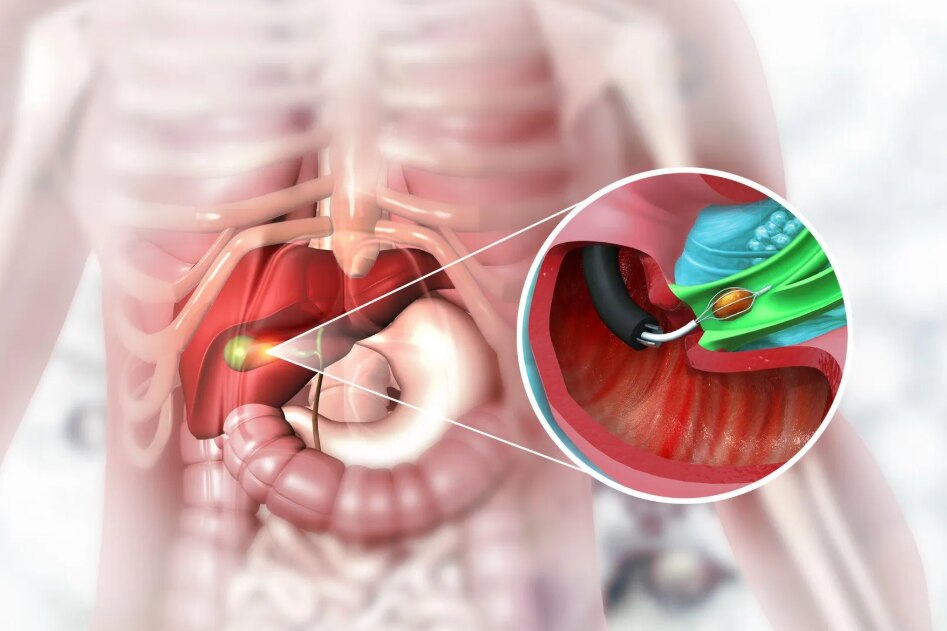
| ERCP | Extracts a stone from the common bile duct | A duct stone or obstruction is suspected or confirmed |
Acute cholecystitis deserves a surgical discussion during the same admission, or within one week when clinically feasible. Treating every attack as indigestion can lead to another painful episode and another admission.
Laparoscopic cholecystectomy is the definitive treatment when symptomatic gallbladder stones remain, but compare operative risks—including bleeding, infection, bile leak and bile-duct injury—with the risks of recurrent attacks when assessing gallstone surgery near Peenya. ERCP does not replace gallbladder removal when surgery is indicated; it addresses the duct, not the stone-forming gallbladder.
What should you compare between conventional laparoscopy, robotic access and ERCP?
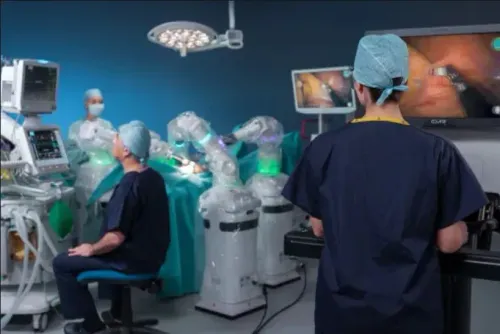
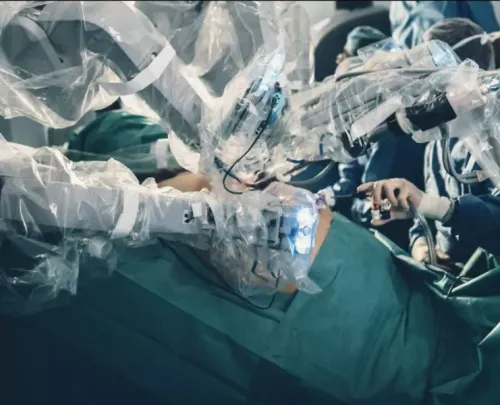
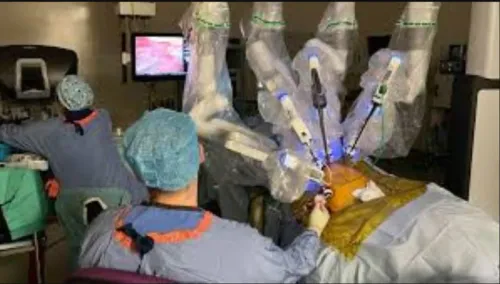
Robotic gall bladder surgery in Peenya is a technology choice, not a different gallstone diagnosis or a guarantee of less pain, no conversion, or zero bile-duct injury. Both robotic and conventional laparoscopic cholecystectomy remove the gallbladder; neither eliminates operative risk.
| Option | What it does | When it applies |
|---|---|---|
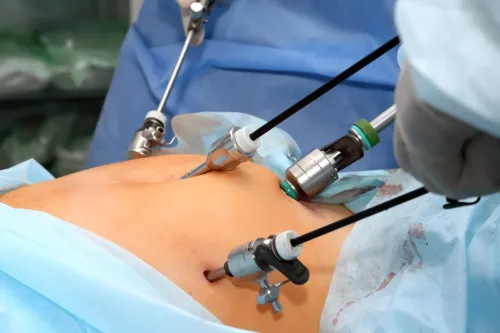
| Conventional laparoscopy | Removes the gallbladder through small incisions | Standard treatment for symptomatic gallbladder stones |
| Robotic access | Uses robotic instruments to perform the same removal | Consider it only when its technical features solve a specific surgical problem |
| ERCP | Enters the digestive tract to clear a common-bile-duct stone | Use when duct obstruction is suspected or confirmed; it does not remove the gallbladder |
Before dividing the cystic duct and artery, the surgeon must identify the critical view of safety. Severe inflammation, scarring, bleeding or previous upper-abdominal surgery can obscure the anatomy.
If the anatomy is unclear, safe responses include:
- Pausing and reassessing
- Obtaining additional imaging
- Converting to an open operation
- Performing a subtotal cholecystectomy
Conversion is a safety decision, not automatically a failed keyhole operation. Risks with either surgical approach include bile-duct injury, bile leak, bleeding, infection, retained duct stones and injury to nearby organs. ERCP adds risks such as pancreatitis, bleeding, infection and perforation.
Evidence has not established routine robotic superiority for ordinary gallstone disease, so ask which clinical problem the chosen access method solves.
How do you choose a surgeon near Peenya, and when does an oncosurgeon matter?
Choose the surgeon by the rescue plan, not by proximity or a “keyhole surgery” label. A search for laparoscopy surgeon gallstones Peenya or gallstone treatment near Peenya laparoscopy surgeon oncosurgeon should lead to specific questions.
- Does the clinician personally perform laparoscopic cholecystectomy regularly?
- How will a common-bile-duct stone be investigated and cleared?
- Is ERCP available on site, or is there a named gastroenterologist and referral pathway?
- What is the plan for a bile leak, bleeding, difficult anatomy or conversion to open surgery?
- Who will review the gallbladder pathology report after removal, and how will you be contacted if it is abnormal?
| Situation | Team to look for | Why it matters |
|---|---|---|
| Uncomplicated symptomatic gallstones | Regular laparoscopic surgeon | Routine removal does not require an oncosurgeon |
| Suspected duct stone or obstruction | Laparoscopic surgeon with ERCP access | The duct may need endoscopic clearance before or after surgery |
| Mass, irregular wall, unexplained jaundice or weight loss | Hepatobiliary or gastrointestinal oncosurgeon | Cancer staging may alter the operation |
| Cancer found on pathology | Oncosurgical multidisciplinary team | Treatment may involve extended surgery, chemotherapy, radiation or a combination |
An oncosurgeon is not routinely required for uncomplicated gallstones. Robotic Cancer Surgery can be considered when its gastrointestinal, laparoscopic and oncologic capabilities match the uncertainty, emergency access and follow-up plan. Continuity and complication management matter more than distance.
Related service
Gall stones treatment near me ROBOTIC GALL BLADDER AND BILIARY SURGERY Robot-assisted gallbladder and biliary surgery represents a significant advancement in treating gallbladder diseases and disorders of the biliary... View service → |
Frequently asked questions
Which gallstone symptoms need emergency care?
Seek urgent medical care for severe or persistent right-upper-abdominal pain, fever or chills, yellow skin or eyes, dark urine, pale stools, repeated vomiting, confusion or fainting. These symptoms can indicate infection, obstruction or pancreatitis.
Which tests show whether a stone has entered the bile duct?
An abdominal ultrasound usually identifies gallbladder stones and bile-duct enlargement. Liver-function blood tests, MRCP or endoscopic ultrasound help assess suspected duct stones. ERCP is mainly used to remove a confirmed or strongly suspected duct stone.
When is gallbladder removal the definitive treatment?
Observation is reasonable for stones that cause no symptoms and no complications. Laparoscopic cholecystectomy is the definitive treatment for recurrent biliary-colic attacks, acute cholecystitis, pancreatitis caused by stones or other complications.
How do laparoscopy, robotic surgery and ERCP differ?
Laparoscopic and robotic cholecystectomy remove the gallbladder through small abdominal incisions. Robotic access offers instrument articulation and three-dimensional visualisation but is not automatically superior for every patient. ERCP uses an endoscope through the mouth to clear stones from the bile duct; it does not remove the gallbladder.
Keywords