These search terms describe different kinds of expertise: laparoscopic technique, cancer-focused surgical judgement and robot-assisted liver resection are not interchangeable credentials. You will be able to match your diagnosis to the right specialist, understand the tests and treatment choices involved, and compare local surgical capability before consenting to an operation.
Key takeaways
- Choose a hepatobiliary surgeon for complex liver, bile-duct or pancreatic surgery.
- Ask which scans, blood tests and biopsy findings support the operation.
- Robotic resection suits selected tumours when minimally invasive access remains safe.
- Compare surgeon expertise, hospital support and follow-up—not the robot alone.
Which specialist do you actually need for liver surgery?
A liver operation needs disease- and procedure-specific expertise, not simply a “robotic” label. A laparoscopy surgeon uses small-incision techniques; a surgical oncologist or oncosurgeon treats cancer within a wider plan; a hepatobiliary surgeon specialises in the liver, bile ducts and pancreas; and a robotic surgeon operates through a robotic platform.
| Specialist | Main expertise | What it does not prove |
|---|---|---|
| Laparoscopy surgeon | Minimally invasive access | Experience with liver resection |
| Surgical oncologist or oncosurgeon | Cancer surgery and treatment planning | Hepatobiliary technical expertise |
| Hepatobiliary surgeon | Liver, bile-duct and complex abdominal surgery | That every operation will suit robotics |
| Robotic surgeon | Surgeon-controlled robotic platform | A separate specialist qualification |
“Robotic” describes the operating platform, not an independent qualification. You control every instrument through the console; the robot does not make decisions or operate alone. A surgeon experienced in laparoscopic colon or bariatric surgery is not automatically experienced in liver resection.
Before choosing a provider, verify:
- Specialist registration and formal training in hepatobiliary or gastrointestinal surgery.
- Recent case volume for your exact operation, such as a segmentectomy or major hepatectomy.
- The conversion-to-open policy and who manages major bleeding.
- Blood-bank, intensive-care, interventional-radiology and urgent open-surgery support.
Bariatric surgery has separate eligibility assessment and long-term nutritional follow-up, including monitoring for deficiencies after surgery. Therefore, a search such as “laparoscopy surgeon oncosurgeron or robotic liver surgery in Nelamangala” or “laparoscopy surgeon oncosurgeon nelamangala” is only a starting point, not proof of suitability.
Which liver problems lead to an operation, and what tests come first?
A liver lesion does not automatically require resection. Operations can treat hepatocellular carcinoma, cholangiocarcinoma and colorectal liver metastases; selected benign tumours or complicated cysts can also need removal. Surgeons also perform living-donor procedures and anatomical resections, such as removing a defined Couinaud segment or lobe, when anatomy and the treatment plan justify it.
| Problem | Why surgery enters the plan |
|---|---|
| Hepatocellular carcinoma | Tumour burden, liver reserve and vascular invasion guide resection |
| Cholangiocarcinoma | Bile-duct location and the possibility of complete removal matter |
| Colorectal liver metastases | Number, distribution and control of the primary cancer determine operability |
| Benign tumour or cyst | Symptoms, growth, bleeding risk or uncertain diagnosis may justify removal |
| Living-donor or anatomical resection | Donor safety or planned segmental anatomy determines the operation |
Before deciding, obtain multiphasic contrast-enhanced CT or MRI and compare previous scans and operation reports. Blood work includes bilirubin, albumin, AST, ALT, platelet count and INR; add viral-hepatitis testing when indicated. Assess cardiopulmonary fitness and chest status. Estimate the future liver remnant because cirrhosis or portal hypertension can make a technically possible resection unsafe.
Suspected or confirmed cancer needs multidisciplinary tumour-board review. For searches such as “robotic liver surgery nelamangala” or “liver surgery near nelamangala,” ask whether the team has confirmed that resection is safer and more effective than surveillance, ablation, transarterial treatment, systemic therapy or transplantation.
When is robotic liver resection the right treatment?
Robotic liver resection is appropriate when the tumour can be removed safely while preserving enough functioning liver. Selection depends on tumour size, number and position, distance from major blood vessels and bile ducts, liver-function results, cirrhosis, portal hypertension and the planned future liver remnant.
A small peripheral wedge or segmental excision differs greatly from a major hepatectomy, which usually removes three or more Couinaud segments. Previous upper-abdominal operations may cause adhesions, and bile-duct or vascular reconstruction can make an open operation safer than robotic access.
- Confirm that the future liver remnant is adequate.
- Review bilirubin, albumin, AST, ALT, platelet count and INR with the imaging.
- Assess vascular invasion, bile-duct involvement and the need for reconstruction.
- Factor in fitness, cirrhosis, portal hypertension and previous operations.
| Option | When it may be preferable |
|---|---|
| Ablation | Small, suitably located tumours or patients unable to tolerate resection |
| Transarterial treatment | Selected hepatocellular carcinoma when resection is unsuitable |
| Chemotherapy or radiotherapy | Metastatic, unresectable or treatment-sensitive disease |
| Transplantation | Eligible patients with selected hepatocellular carcinoma and limited liver reserve |
| Surveillance | Small, indeterminate or slow-growing lesions needing interval imaging |
For hepatocellular carcinoma, tumour burden, vascular invasion, liver reserve, fitness and transplant eligibility determine treatment—not the availability of a robot. Deep lesions, major-vessel involvement, extensive adhesions or complex reconstruction may favour open surgery.
Search terms such as robotic liver resection nelamangala or robotic liver surgery nelamangala identify services, not suitability; a multidisciplinary review should decide whether resection is safest.
What happens during the operation, and how do the approaches compare?
The operation starts with review of CT or MRI scans to map the tumour, its relationship to vessels and bile ducts, and the planned resection line.
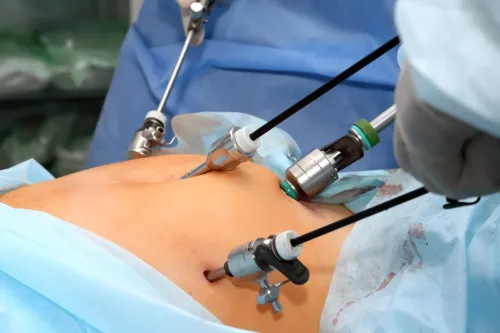
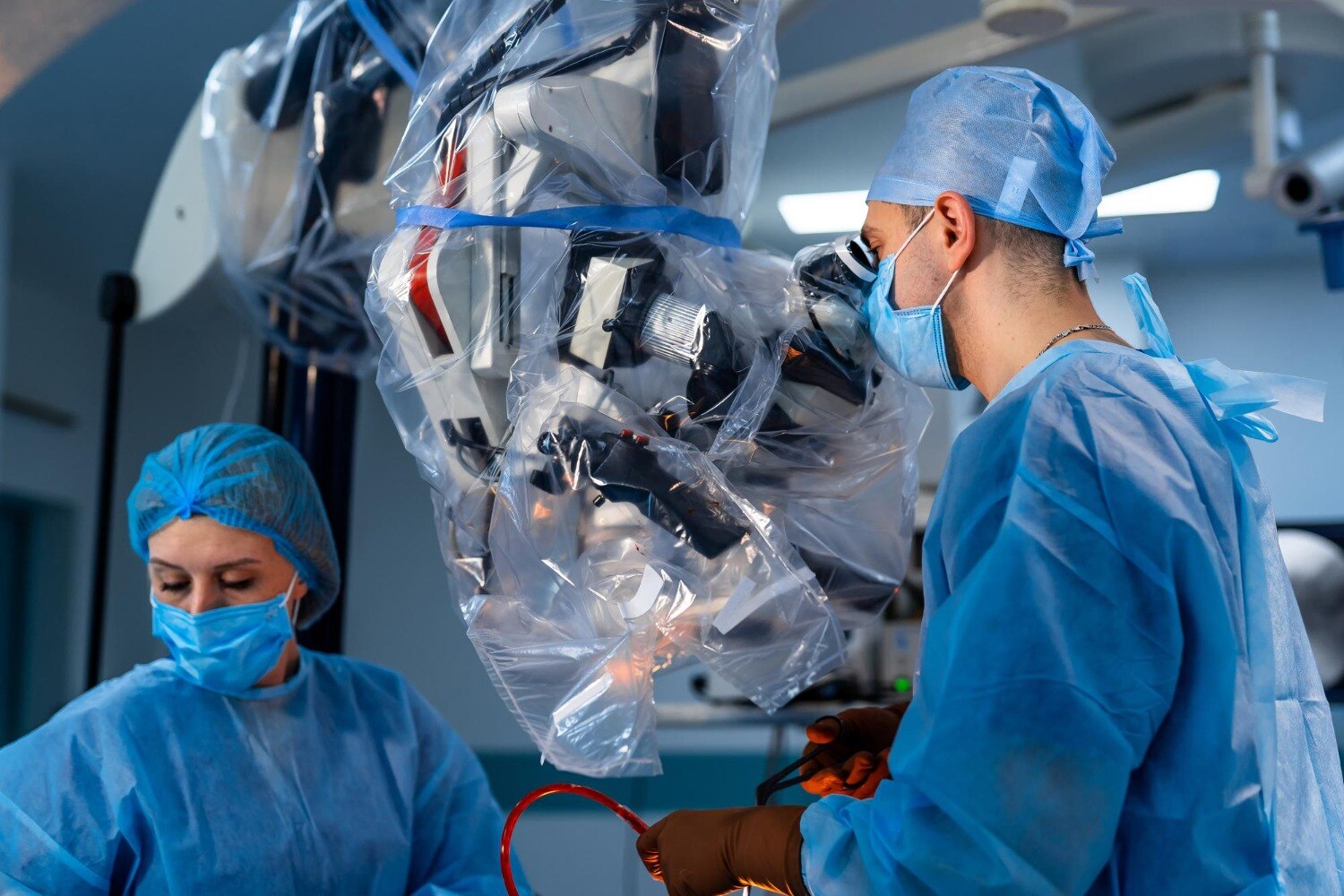
After anaesthesia, the surgeon places ports, mobilises the liver, controls inflow or outflow structures when required, divides liver tissue during parenchymal transection, removes the specimen and sends it for pathology review.
| Approach | Incision, view and instruments | Blood loss, recovery and complexity |
|---|---|---|
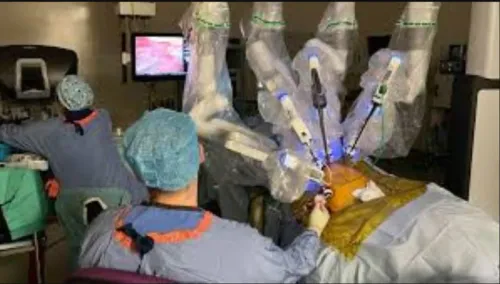
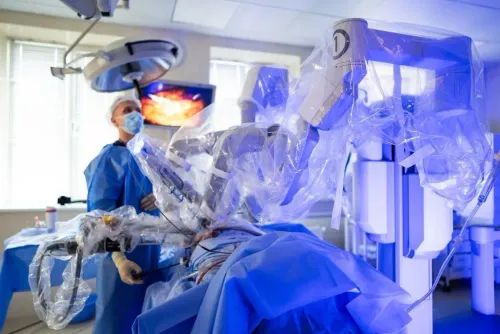
| Robotic | Several small ports; three-dimensional magnified view and wristed instruments | Often less blood loss and faster recovery in selected cases; technically demanding, with conversion to open surgery if bleeding or exposure becomes unsafe |
| Conventional laparoscopic | Several small ports; two-dimensional view and straight instruments | Similar potential recovery benefits; restricted instrument angles increase technical difficulty, and conversion remains possible |
| Open | One larger abdominal incision; direct access and standard instruments | More pain and longer recovery, but dependable exposure for deep tumours, major-vessel involvement, adhesions or reconstruction |
All three approaches can cause bleeding, bile leak, infection, blood clots and liver failure. A conversion to open surgery is a safety decision, not necessarily a failed operation.
Enhanced recovery depends on counselling, sensible fasting, multimodal pain relief, early mobilisation and oral intake when safe. The robot alone does not create that pathway.
For searches such as robotic liver resection nelamangala or liver surgery near nelamangala, compare the team’s exact operation, bleeding-control plan and conversion policy—not just the equipment. Shorter recovery claims also reflect patient selection and team experience.
How should you assess a liver-surgery option near Nelamangala?
Assess a liver surgery near Nelamangala option by capability, not driving distance or the word “robotic.” Ask which operation is planned: wedge resection, segmentectomy, lobectomy or major hepatectomy, and why that extent is necessary.
Use this consultation checklist:
- Ask how many times the surgeon performed that exact operation in the past 12 months.
- Request the expected conversion-to-open rate and rates of bleeding, bile leak, infection and liver failure.
- Confirm that the specimen goes to an experienced hepatobiliary pathology service.
- Verify round-the-clock blood-bank access, including red cells, plasma and platelets.
- Confirm 24-hour critical care, interventional radiology and immediate access to urgent open surgery.
| Support | Question to ask | Why it matters |
|---|---|---|
| Pathology | Who will review the tumour and margins? | Confirms diagnosis and whether the cancer was completely removed |
| Critical care | Is an intensivist available overnight? | Liver failure or major bleeding needs rapid treatment |
| Interventional radiology | Can bleeding or bile complications be treated urgently? | Some problems need image-guided drainage or embolisation |
| Open surgery | Who takes over if minimally invasive surgery is unsafe? | Conversion must be a planned safety measure, not a crisis |
Request a second opinion for multiple tumours, major-vessel involvement, cirrhosis, portal hypertension, prior upper-abdominal surgery or an uncertain diagnosis.
For a search such as robotic liver surgery nelamangala, ask Robotic Cancer Surgery in Bengaluru to review your scans, explain resection, ablation, chemotherapy or open-surgery alternatives, and identify the hepatobiliary, pathology, critical-care and multidisciplinary support available for your case.
Related service
ROBOT ASSISTED LIVER SURGERY Robot-assisted liver surgery utilizes advanced robotic systems to enhance surgical precision and minimize invasiveness in treating liver conditions. View service → |
Frequently asked questions
Which specialist should you consult for liver surgery?
Choose a hepatobiliary surgeon for liver, bile-duct or pancreatic procedures. Add a surgical oncologist when cancer treatment requires coordinated staging, chemotherapy or radiation. A laparoscopy or robotic surgeon describes the operating method, not the disease specialty.
Which liver problems can require an operation?
Operations can treat selected liver cancers, metastases, benign tumours, cysts and complications involving the bile ducts. Your evaluation usually starts with liver-function blood tests and imaging such as ultrasound, contrast CT or MRI; suspected cancer can require additional staging and biopsy review.
When is robotic liver resection appropriate?
Robotic resection is appropriate when the tumour location, size, liver function and required margin allow safe minimally invasive surgery. Open surgery remains the better option when tumour extent, bleeding risk or reconstruction makes robotic access unsafe.
How should you compare liver-surgery options near Nelamangala?
Ask about the surgeon’s liver-specific experience, the planned operation, conversion-to-open criteria, anaesthesia and intensive-care support, pathology review, expected hospital stay and follow-up arrangements.
Keywords