Heartburn, regurgitation and a hiatus hernia do not automatically mean you need an operation, and a scan showing a hernia does not prove that the hernia caused your symptoms. You will be able to compare medication, conventional laparoscopy, robotic repair and bariatric alternatives by matching the treatment to your test results, anatomy and surgical risk.
Key takeaways
- GERD can exist without a hiatus hernia, and a small hernia may cause no symptoms.
- Ask about endoscopy, pH monitoring and manometry before considering surgery.
- Choose repair based on reflux testing, hernia size, symptoms and previous operations.
- Compare a surgeon’s experience, hospital support and follow-up plan in Nagasandra.
A Hiatus Hernia Is Not the Same as GERD
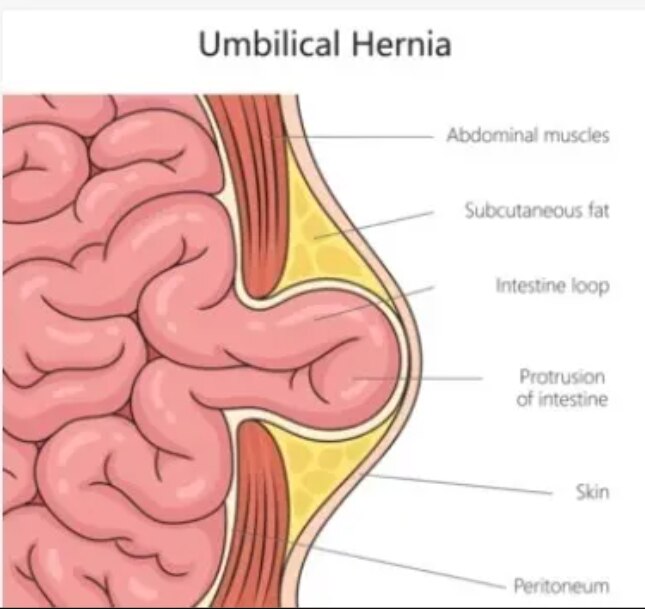
A hiatus hernia is an anatomical change: part of the stomach moves through the opening in the diaphragm where the oesophagus passes. GERD is a functional problem: stomach contents repeatedly flow back into the oesophagus. GERD can occur without a hernia, and a small hernia can exist without causing symptoms.
| Type | What it means | Symptoms needing attention |
|---|---|---|
| Sliding hernia | The junction of the stomach and oesophagus moves above the diaphragm; it commonly accompanies reflux. | Heartburn, sour fluid in the throat, belching, or symptoms worsening after meals or when lying down |
| Paraesophageal hernia | Part of the stomach pushes beside the oesophagus while the junction may remain in place. | Chest or upper-abdominal pressure, early fullness, breathlessness, difficulty swallowing, or pain after eating |
| GERD without hernia | Reflux occurs despite no visible stomach displacement. | Frequent heartburn, regurgitation, nighttime cough, hoarseness, or disturbed sleep |
Seek prompt medical assessment for food sticking, repeated vomiting, vomiting blood, black stools, unexplained weight loss, anaemia, or persistent chest pain. Sudden severe chest pain with sweating or breathlessness requires emergency care, because it may be heart-related.
An incidental small hernia does not automatically explain heartburn or justify repair. Persistent troublesome symptoms despite correctly taken proton-pump inhibitors, troublesome regurgitation, a large paraesophageal hernia, or confirmed reflux warrants specialist assessment; symptoms without proven reflux, functional heartburn, or an untreated motility disorder can make surgery the wrong treatment.
Tests That Establish Whether Surgery Fits Your Problem
A symptom history starts the assessment, but it cannot prove that reflux caused your symptoms. Before robotic hiatus hernia surgery for gerd nagasandra, objective testing is especially important when endoscopy is normal, symptoms are atypical, or surgery is being considered.
- Upper gastrointestinal endoscopy inspects the oesophagus and stomach for erosive oesophagitis, Barrett’s oesophagus, narrowing, ulcers, and a visible hiatal hernia. Biopsy any suspicious tissue.
- Ambulatory pH or pH-impedance monitoring records acid and non-acid reflux over 24 to 96 hours. It confirms abnormal reflux and shows whether recorded episodes match your symptoms.
- Oesophageal manometry measures swallowing pressure and movement. It detects achalasia or another motility disorder and helps the surgeon choose a safe repair.
- A barium swallow maps the hernia, oesophageal emptying, obstruction, and compression. It adds anatomical information but does not prove GERD by itself.
| Test | What it establishes | Why it affects surgery |
|---|---|---|
| Endoscopy | Tissue injury, narrowing, Barrett’s, visible hernia | Finds damage requiring treatment and excludes another cause |
| pH-impedance monitoring | Abnormal acid or non-acid exposure | Supports surgery when reflux is objectively documented |
| Manometry | Oesophageal movement and lower-sphincter function | Excludes untreated motility disorders |
| Barium swallow | Hernia size, position, obstruction, emptying | Clarifies complex or paraesophageal anatomy |
Surgery fits best when troublesome symptoms persist despite correctly taken proton-pump inhibitors, reflux is documented, regurgitation continues, medication is intolerable, or a large paraesophageal hernia creates compression risk. A small hernia on a scan alone is not enough; functional heartburn, unconfirmed reflux, another cause, or high anaesthetic risk can make repair the wrong choice.
When Medication or Another Operation Makes More Sense
Do not choose an operation merely because a scan shows a hiatus hernia. Choose treatment according to reflux evidence, symptom severity, oesophageal movement, body weight and anaesthetic risk.
| Option | What it means | When it applies |
|---|---|---|
| Medication and lifestyle | Proton-pump inhibitor treatment, weight reduction, smaller meals, avoiding food for three hours before bed and raising the bedhead 15–20 cm | Symptoms are controlled, reflux is unproven, functional heartburn is suspected, or surgical risk outweighs benefit |
| Laparoscopic fundoplication with hiatal repair | The stomach is reduced, the hiatus is repaired and its upper portion is wrapped around the oesophagus | Confirmed reflux with suitable oesophageal motility when conventional laparoscopy is preferred; repairing the hernia alone may leave reflux untreated |
| Gastropexy | The stomach is fixed to the abdominal wall or diaphragm to prevent displacement | A large paraesophageal hernia needs mechanical stabilisation but full repair or fundoplication carries excessive risk, such as in a frail patient |
| Roux-en-Y gastric bypass | The stomach is made smaller and food is diverted away from the acid-producing stomach | Obesity accompanies significant GERD and weight loss is also a treatment goal; sleeve gastrectomy is not automatically an antireflux operation and can worsen GERD |
A robotic repair is not a separate indication; it is a way to perform the dissection, hiatus closure and fundoplication. Choose it only when those steps address your documented problem and the surgeon explains why robotic access is preferable to laparoscopy.
Ask for another opinion if symptoms lack objective reflux evidence, manometry shows an untreated motility disorder, or another condition explains them.
What the Repair Involves—and What Robotic Surgery Changes
Repair usually involves returning the stomach below the diaphragm, removing the hernia sac, narrowing the enlarged hiatus with sutures, and adding an antireflux procedure when objective reflux supports it. A fundoplication wraps the upper stomach around the lower oesophagus; the chosen wrap depends on reflux findings and oesophageal movement.
- The surgeon frees the oesophagus and stomach from the chest.
- The stomach is brought back into the abdomen.
- Sutures close the diaphragmatic opening around the oesophagus.
- A fundoplication or gastropexy may secure the stomach and reduce reflux or re-herniation risk.
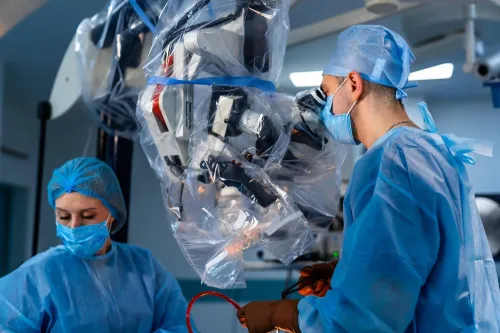
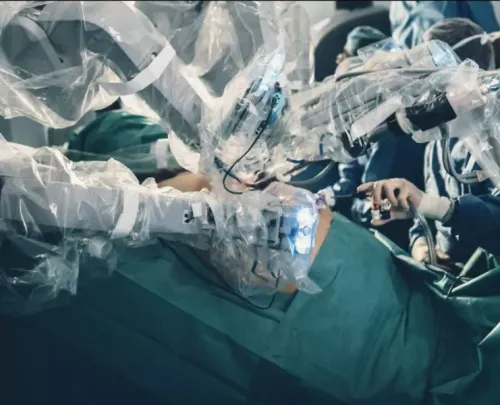
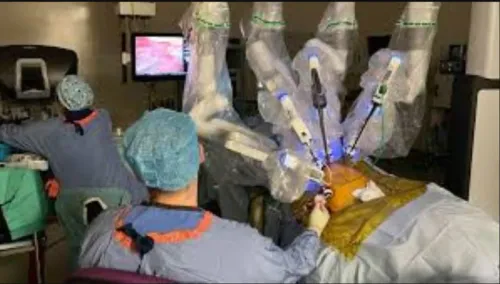
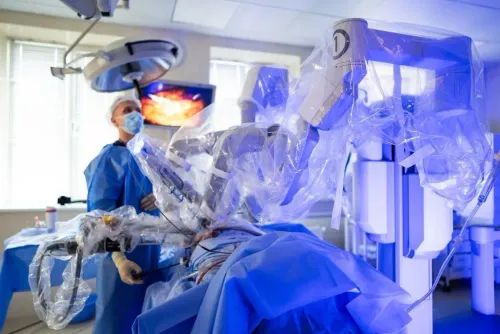
Robotic esophageal surgery uses wristed instruments and a three-dimensional view. The surgeon still controls every dissection, stitch, wrap and response to bleeding or organ injury; the robot does not operate independently.
| Approach | Practical difference | What it proves |
|---|---|---|
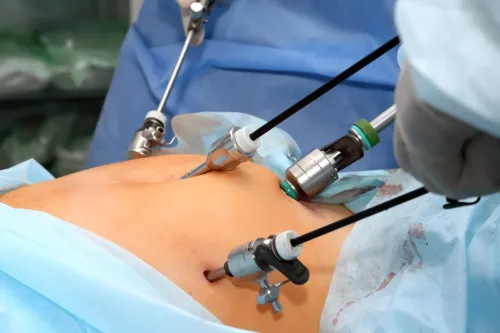
| Conventional laparoscopy | Straight instruments and a two-dimensional screen | Effective repair in experienced hands |
| Robotic surgery | Articulated instruments and three-dimensional magnification | Better access for selected complex anatomy, not automatically better reflux control |
| Either approach | Small abdominal incisions and general anaesthesia | Recovery depends on the repair, patient health and complications |
Robotic assistance offers its strongest practical benefit when the hiatus is large, scarred or anatomically difficult. Evidence has not shown universal clinical superiority over laparoscopy, while equipment costs can be higher and operating time can increase during a team’s learning phase.
Ask about the surgeon’s results with both techniques and with complex hernias, not the device alone. Recurrence remains possible after either operation; a scan finding does not always mean recurrent symptoms or another operation.
How to Vet a Surgeon and Hospital in Nagasandra
Compare credentials, hernia-specific experience and hospital support—not the word “robotic.” A search for gi oncosurgeon Nagasandra or dr santosh robotic surgeon gives you a lead, not proof that the clinician routinely repairs hiatus hernias or treats GERD.
Ask the surgeon to show you:
- Medical registration number, gastrointestinal or upper-GI surgical specialty, fellowship training and formal robotic training.
- Annual numbers for hiatal hernia repairs and antireflux operations, separated from cancer procedures.
- Rates of complications, recurrent hernia, failed reflux control and conversion from robotic or laparoscopic surgery to open surgery.
- The hospital’s ICU, anaesthesia, endoscopy, radiology and blood-bank facilities, plus the surgeon’s privileges to manage an emergency there.
- Who answers urgent calls after discharge, who performs a reoperation if needed and what follow-up schedule you will receive.
- Your proposed tests and the reason for each: upper endoscopy, ambulatory pH or pH-impedance monitoring and oesophageal manometry when surgery is being considered.
Do not treat “robotic oesophageal surgery” as a quality certificate. For suspected oesophageal or gastric cancer, verify staging scans, endoscopic biopsy, pathology review and participation from oncology, radiology and nutrition teams; cancer expertise does not automatically equal benign hernia expertise.
Robotic Cancer Surgery should still provide a separate GERD assessment, because the robot does not prove better reflux outcomes than laparoscopy. Compare the surgeon’s results, team experience and emergency plan before comparing equipment.
Related service
ROBOT ASSISTED ESOPHAGEAL SURGERY ROBOT ASSISTED ESOPHAGEAL SURGERY Robot-assisted esophageal surgery provides precision and minimally invasive techniques for treating esophageal conditions such as cancer, achalasia,... View service → |
Frequently asked questions
Is a hiatus hernia the same as GERD?
No. A hiatus hernia is when part of the stomach moves through the diaphragm; GERD is repeated backflow of stomach contents into the oesophagus. Either can occur without the other.
What tests show whether hiatus hernia surgery fits my GERD?
Doctors use upper gastrointestinal endoscopy, reflux monitoring such as 24-hour pH or impedance-pH testing, and oesophageal manometry. A contrast swallow study can also define the hernia’s position and size.
When might medication or another operation make more sense than robotic surgery?
Medication may fit symptoms controlled by acid suppression without troublesome regurgitation or a significant anatomical defect. Another operation may be better for a very large or complicated hernia, severe scarring, or a failed previous repair.
What does robotic hiatus hernia repair involve?
The surgeon moves the stomach below the diaphragm, closes the widened opening and often creates an anti-reflux repair. Robotic instruments provide wristed movement and magnified views, but outcomes still depend on correct patient selection and surgical expertise.
Keywords