Right-upper-abdominal pain does not always mean that a gallstone simply needs removal. By the end, you will know which symptoms need same-day care, which tests distinguish gallbladder disease from bile-duct or pancreas problems, and when a robotic consultation near Peenya is worth pursuing.
Key takeaways
- Seek same-day care for persistent pain, fever, jaundice, or repeated vomiting.
- Ultrasound and liver tests help show whether stones are blocking bile flow.
- Recurrent attacks, inflammation, or complications often call for gallbladder removal.
- Ask how robotic surgery changes your risks, recovery, and total treatment plan.
Which gallstone symptoms need same-day emergency care?
A short attack after a fatty meal that settles within a few hours can fit uncomplicated biliary colic. Stop waiting for a routine appointment when right-upper-abdominal pain is severe, persists for hours, returns repeatedly, or comes with fever, chills, repeated vomiting, or pain radiating to the back.
| Condition | Typical warning pattern | What it may indicate |
|---|---|---|
| Biliary colic | Short-lived pain after a meal, without fever or jaundice | Temporary blockage at the gallbladder outlet |
| Acute cholecystitis | Persistent right-upper-abdominal pain, fever, tenderness, vomiting | Inflamed or infected gallbladder |
| Bile-duct obstruction or cholangitis | Yellow eyes, dark urine, pale stools, fever or chills | A common bile duct stone, with possible infection |
| Gallstone pancreatitis | Severe upper-abdominal pain spreading to the back, vomiting | Pancreatic inflammation caused by a migrating stone |
Seek same-day medical assessment for yellow eyes or skin, dark urine, pale stools, confusion, faintness, or low blood pressure. These signs can signal infection, worsening obstruction, sepsis, or dehydration; do not drive yourself if you feel faint or confused.
Unstable sepsis, suspected cholangitis, or pancreatitis requires hospital treatment, intravenous fluids, monitoring, antibiotics when infection is suspected, and urgent duct or pancreatic assessment. Stabilisation comes before a planned robotic operation.
Even when searching for gall bladder treatment near Peenya, start with emergency assessment if these warning signs are present, because the eventual procedure may need duct clearance or a different timing and approach.
How do doctors find out what the gallstones are causing?
Doctors combine your symptoms, examination, ultrasound and blood tests; no single result proves that gallstones caused the pain. Ask about attack duration, meal-related pain, fever, vomiting, jaundice, dark urine and pale stools. Abdominal tenderness, guarding or a fever changes the urgency.
Ultrasound can show gallstones, gallbladder-wall thickening, fluid around the gallbladder or a widened common bile duct. It cannot by itself prove that a visible stone caused your pain, because symptom-free stones are common and similar pain can come from ulcers, reflux or other conditions.
Blood tests look for complications:
- Bilirubin: rising levels support impaired bile drainage.
- AST and ALT: marked rises can occur with bile-duct injury or obstruction.
- Alkaline phosphatase and GGT: elevation supports cholestasis, especially with bilirubin.
- Lipase: order it when severe pain, vomiting or pain reaching the back raises concern for pancreatitis.
| Finding | What it may indicate | What it changes |
|---|---|---|
| Gallstones without inflammation | Symptomatic or incidental stones | Correlate with the history before discussing surgery |
| Thickened wall and persistent tenderness | Acute cholecystitis | Prompt surgical or hospital assessment |
| Recurrent pain with a thickened, scarred gallbladder | Chronic inflammation | Elective cholecystectomy may be considered |
| Jaundice, abnormal liver tests or a widened duct | Common bile duct obstruction or duct stone | MRCP or endoscopic ultrasound may be needed |
| Fever with jaundice and systemic illness | Cholangitis | Urgent antibiotics and duct drainage |
| Raised lipase with compatible pain | Gallstone pancreatitis | Stabilise pancreatitis before surgery |
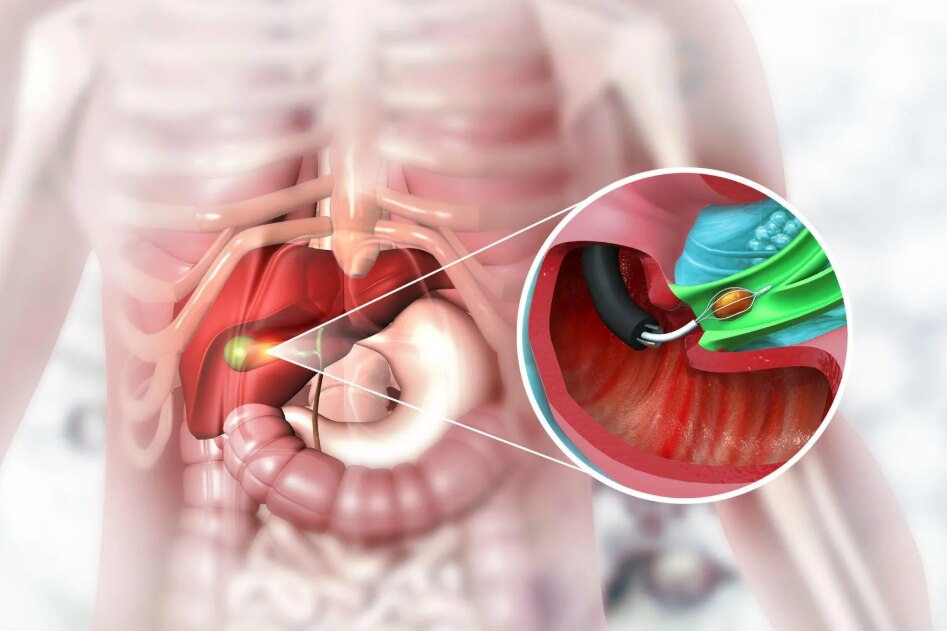
ERCP is mainly for duct clearance or a high-probability duct stone, not routine first-line diagnosis. A robotic gall bladder surgery consultation should classify the problem before choosing an operation.
When is gallbladder removal the right treatment?
Finding gallstones does not automatically mean you need surgery. Incidental stones without pain or complications usually need observation, not cholecystectomy.
Removal becomes practical when you have recurrent biliary-colic attacks, acute or chronic cholecystitis, or gallstone pancreatitis after stabilisation. NICE recommends laparoscopic cholecystectomy within one week of acute cholecystitis diagnosis when feasible; delay can allow further inflammation and adhesions, making dissection harder.
Use this checklist when deciding whether surgery is appropriate:
- Ask whether the pain is truly from gallstones. Reflux, peptic ulcer disease, liver disease or another condition can mimic biliary colic.
- Treat infection, pancreatitis or common bile duct obstruction first when present. Jaundice, abnormal liver tests or a widened duct can require duct imaging and clearance before gallbladder surgery.
- Discuss surgery for a porcelain gallbladder or selected asymptomatic cases after specialist assessment.
- Treat a polyp or thickened wall as a separate risk question. Interval growth, sessile morphology, larger size, an irregular wall or other risk factors can require specialist review because cancer must not be missed.
Suspected gallbladder cancer changes the operation. You may need staging, pathology review and hepatobiliary or cancer-surgery input; an extended resection can be safer than routine cholecystectomy. A gall bladder treatment near Peenya consultation should therefore identify simple symptomatic stones, inflammation, duct stones, pancreatitis or possible tumour before choosing the operation.
When does robotic surgery add value over standard laparoscopy?
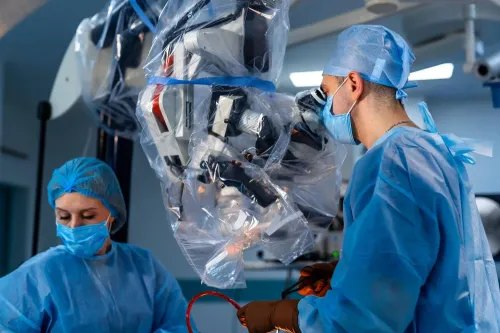
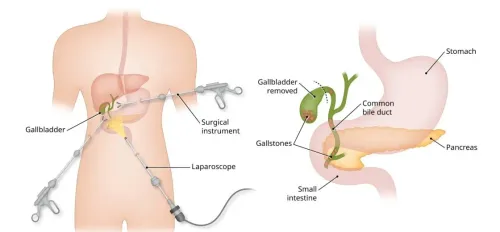
Laparoscopic cholecystectomy remains the usual comparison for uncomplicated symptomatic gallstones. Robotic surgery is still a port-based operation under general anaesthesia; it is not incision-free and does not avoid surgery.
| Option | Potential value | Main trade-off |
|---|---|---|
| Standard laparoscopy | Established approach for routine gallbladder removal | Limited instrument movement in difficult anatomy |
| Robotic cholecystectomy | More precise instrument control for difficult dissection, abnormal anatomy, dense scarring or complex biliary work | Equipment expense, surgeon experience and longer operating time in some settings |
| Open or converted surgery | Safer exposure when anatomy or bleeding cannot be controlled minimally invasively | Larger incision and longer recovery |
The word robotic alone does not prove a routine clinical advantage. For robotic gallstone surgery Peenya searches, compare the surgeon’s difficult-case experience, expected operating time, total equipment expense and access to emergency support.
Robotics may be unsuitable with unstable sepsis, major anaesthetic risk, extensive previous upper-abdominal surgery, severe inflammation or suspected cancer. A robotic surgeon for gallstone problems near Peenya should obtain the critical view of safety before dividing anything: identify the cystic duct and cystic artery entering the gallbladder.
If inflammation or scarring prevents that view, accepted safety choices include:
- Stop dissection and use intraoperative imaging.
- Perform a subtotal cholecystectomy.
- Convert to conventional laparoscopy or open surgery.
Conversion for bleeding, adhesions, unclear anatomy or suspected bile-duct injury is a safety decision, not automatically a failure.
What should you ask at a robotic gallstone consultation near Peenya?
Choose the surgeon and hospital by their safety plan, not by a search result or console certificate. A proper robotic gall bladder surgery consultation should first classify your condition as simple symptomatic stones, acute inflammation, a common bile duct stone, pancreatitis or a possible tumour.
Ask these questions:
- How many difficult or acute cholecystectomies do you perform each year?
- How will you assess a suspected duct stone: liver tests, MRCP, endoscopic ultrasound or ERCP?
- Who provides emergency cover if bleeding, bile leakage or infection occurs?
- What will you do if inflammation prevents the critical view of safety?
- Can this hospital provide ERCP, MRCP, intensive care and open conversion without transferring me?
| Finding | Question it changes | Capability to verify |
|---|---|---|
| Simple symptomatic stones | Is standard laparoscopic surgery sufficient? | Surgeon’s experience with routine and difficult cases |
| Duct stone or pancreatitis | Does duct clearance come before, during or after gallbladder removal? | ERCP, MRCP and endoscopic expertise |
| Unclear anatomy or severe inflammation | What is the bailout plan? | Subtotal cholecystectomy, imaging and open-surgery support |
| Possible tumour | Is routine cholecystectomy inappropriate? | Specialist cancer surgery, staging and pathology review |
If you search “dr santosh gallstone surgeon” or “robotic surgeon for gallstone problems near peenya,” verify the clinician’s full name, medical registration, surgical specialty, hospital privileges and complication arrangements.
Robotic Cancer Surgery is one practical example where you should ask these questions; its name is not a diagnosis or a promise that robotic treatment is required.
Related service
Gall stones treatment near me ROBOTIC GALL BLADDER AND BILIARY SURGERY Robot-assisted gallbladder and biliary surgery represents a significant advancement in treating gallbladder diseases and disorders of the biliary... View service → |
Frequently asked questions
Which gallstone symptoms need same-day emergency care?
Seek same-day emergency care for severe right-upper-abdominal pain lasting hours, fever, chills, repeated vomiting, jaundice, confusion, or pain spreading to the back. These signs can indicate gallbladder inflammation, bile-duct blockage, or pancreatitis.
How do doctors find out what the gallstones are causing?
Doctors use your symptom pattern and examination alongside blood tests such as a complete blood count, bilirubin, liver enzymes, and lipase. An abdominal ultrasound usually looks for stones, gallbladder-wall thickening, fluid, and bile-duct dilation; further scans or bile-duct procedures may be needed when blockage is suspected.
When is gallbladder removal the right treatment?
Removal is commonly considered for repeated biliary-colic attacks, acute or chronic cholecystitis, pancreatitis caused by gallstones, or stones causing bile-duct obstruction. A silent gallstone without symptoms does not automatically require surgery.
When does robotic surgery add value over standard laparoscopy?
Robotic surgery can offer wristed instruments, three-dimensional magnified vision, and precise control in difficult anatomy or complex abdominal cases. Ask the surgeon whether those features provide a specific benefit for you compared with standard laparoscopy, including cost, operating time, complications, and recovery.
Keywords