Age alone does not decide whether liver cancer surgery is safe; frailty, heart and lung function, kidney health, nutrition, medicines and the liver’s remaining reserve matter more. You will be able to judge whether robotic resection is a reasonable option, what testing to expect, which alternatives to compare and what to ask a surgical team near Nagasandra.
Key takeaways
- Frailty, nutrition, heart and lung health matter more than age alone.
- Ask how much healthy liver will remain after tumour removal.
- Compare robotic surgery with ablation, embolisation, open surgery and systemic treatment.
- Choose a team with liver, oncology, anaesthesia and rehabilitation expertise.
How doctors assess an older adult before liver cancer surgery
Chronological age alone does not determine whether an older adult can tolerate liver cancer surgery. Frailty, walking ability, memory, nutrition, anaemia, diabetes, heart and lung disease, kidney function, current medicines and the ability to manage recovery at home give a clearer risk picture.
Small incisions do not remove the stresses of surgery. General anaesthesia, carbon-dioxide abdominal insufflation and prolonged positioning can strain breathing, circulation and kidney function. Severe cardiopulmonary disease calls for an anaesthesia review and a specific postoperative monitoring plan.
A preoperative assessment usually includes:
- A contrast multiphasic CT or liver MRI to map the tumour, blood vessels, bile ducts and future liver remnant. Chest imaging is added when symptoms, examination or cancer staging indicate it.
- Liver-function tests, a complete blood count for anaemia and platelets, creatinine and other kidney tests, coagulation tests, and hepatitis B and C assessment.
- A medication review covering blood thinners, aspirin, diabetes medicines, pain medicines and supplements. Do not stop any medicine without instructions; anticoagulant timing and diabetes dosing need a written plan.
- A frailty, geriatric or anaesthesia assessment for a high-risk patient, including walking speed, falls, memory, nutrition and home support.
The team should also ask who will help with meals, medicines, wound care and transport after discharge. A search for robotic liver cancer surgery near Nagasandra identifies a location, not proof that a hospital or surgeon performs complex liver resections with open-surgery, intensive-care and oncology backup.
Which liver cancers can be removed robotically, and how much liver can remain
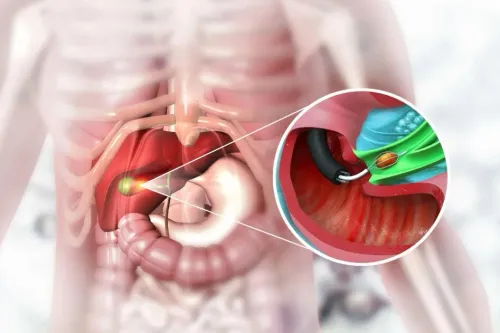
A liver cancer diagnosis does not automatically make you a candidate for robotic resection. The decision depends on tumour size and number, peripheral or deep location, distance from major blood vessels and bile ducts, disease outside the liver, and whether enough healthy liver will remain.
| Lesion type | How doctors may establish the diagnosis | Main resection rule |
|---|---|---|
| Hepatocellular carcinoma | Characteristic findings on multiphasic CT or liver MRI plus clinical context may be enough; biopsy is used when imaging is not diagnostic | Remove the tumour only if liver function and portal pressure support safe resection |
| Colorectal metastases | Imaging, the colorectal cancer history and pathology guide diagnosis; biopsy is used when uncertainty remains | All visible disease must be removable or controllable while preserving adequate functioning liver |
| Other metastatic tumours | The original cancer pathology and imaging guide diagnosis; a biopsy may be necessary | Confirm that liver disease and disease elsewhere have a controllable treatment plan |
Robotic access suits selected peripheral tumours and some left-lateral resections. Deep posterior lesions, extensive tumours, or lesions beside major vessels or bile ducts need specialist judgement; laparoscopy or open surgery may be safer.
The team will assess Child-Pugh class, MELD-related measures, platelet count, spleen enlargement, varices and other portal-hypertension signs. They will calculate the future liver remnant’s volume and quality, because cirrhosis or severe liver failure can make a technically successful operation dangerous.
Ask which diagnostic rule applies to your lesion. “Robotic liver cancer surgery Hesaraghatta” is a search term, not a suitability test.
When robotic resection is preferable, and when another treatment is safer
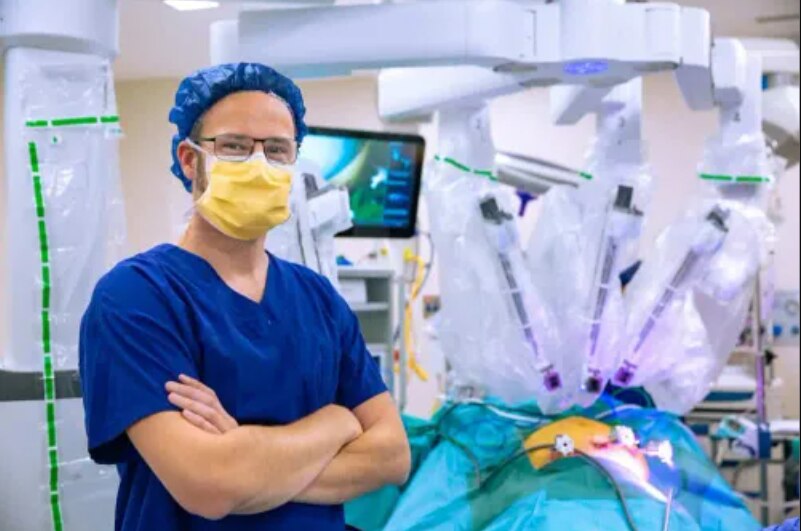
Robotic resection is preferable for a selected peripheral tumour or some left-lateral resections when imaging shows that the surgeon can remove it safely while preserving enough functioning liver. It offers articulated instruments, three-dimensional vision and smaller access incisions, but it is an access method—not a different cancer treatment.
Staging, pathological margin assessment and cancer-directed follow-up remain necessary. A smaller incision does not compensate for an inadequate margin, untreated disease elsewhere or excessive loss of liver tissue.
Deep posterior tumours, extensive resections and lesions beside major blood vessels or bile ducts require specialised judgement. Laparoscopic resection or open surgery may provide safer control, particularly when the operation is large or bleeding would be difficult to manage through small ports.
Compare the options against the tumour and your liver reserve:
- Ablation suits selected small tumours when surgery would remove too much liver or carry excessive risk.
- Transarterial embolization or chemoembolization treats selected liver-dominant disease through its blood supply rather than removing the tumour.
- Stereotactic radiotherapy can target an unsuitable surgical lesion when accurate radiation planning is feasible.
- Systemic chemotherapy or immunotherapy becomes central when disease is widespread, unresectable or better treated throughout the body.
- Transplant evaluation matters for selected liver cancers with severe underlying liver disease, within accepted tumour criteria.
Robotic surgery is the wrong choice when disease extends widely outside the liver, vessels prevent safe removal, liver failure leaves inadequate reserve, anaesthesia risk is unacceptable or the planned resection is too large. Choose the safest oncologically sound treatment, not the smallest incision.
What happens during the operation and what complications remain possible
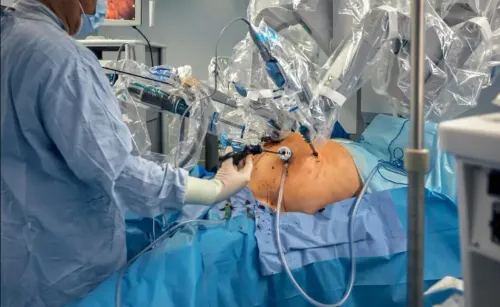
After general anaesthesia, the team positions you securely, inflates the abdomen with carbon dioxide and places several small ports. Prolonged positioning and abdominal pressure still affect the heart and lungs, especially in an older patient.
- The surgeon inserts a camera, inspects the liver and checks the tumour, surrounding tissue and visible disease.
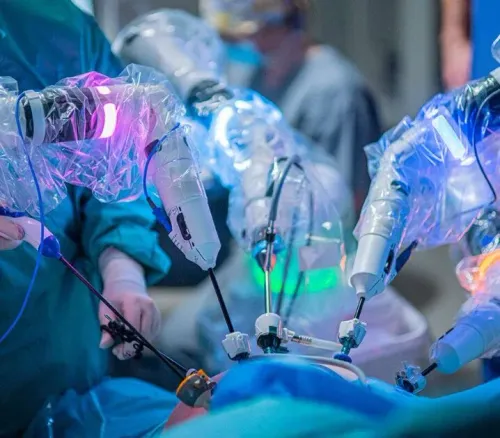
- The robotic instruments, controlled from a console, divide the planned segment or portion of liver while preserving an adequate cancer margin.
- The team controls liver blood vessels and bleeding, then identifies and seals bile channels to reduce leakage.
- The removed specimen goes through a port, sometimes after enlarging one incision slightly, for pathology examination of the tumour and margins.
- Before closing, the surgeon checks the cut liver surface and abdomen for active bleeding or bile leakage, then removes the instruments and closes the port sites.
If tumour location, unexpected anatomy or bleeding makes continued minimally invasive surgery unsafe, the team may convert to an open operation. That is a safety decision, not proof that the procedure failed.
Possible complications include:
- Postoperative bleeding, sometimes requiring transfusion or another operation
- Bile leak or a fluid collection
- Wound or abdominal infection
- Blood clots in the legs or lungs
- Pneumonia
- Kidney injury
- Post-hepatectomy liver failure
Risk depends mainly on the amount and location removed, cirrhosis and remaining liver reserve, plus heart, lung and kidney function. Smaller incisions do not remove major abdominal-surgery risks, and robotic access alone has not been shown to improve cancer survival.
How to choose a liver cancer team near Nagasandra and nearby areas
Choose the team by capability, not distance. A search for robotic liver surgery Peenya or a robotic surgeon for liver cancer Yeshwantpur identifies an area, not proof of suitable expertise. Confirm hepatobiliary (HPB) training, regular liver resections, experience with the tumour’s segment and access to open-surgery backup.
Ask these questions at the consultation:
- Who reviews my multiphase CT or liver MRI?
- How was my future liver remnant calculated, including liver quality and cirrhosis?
- How often do your robotic liver cases convert to open surgery?
- Will a multidisciplinary tumour board review my case?
- What happens if major bleeding, vascular involvement or an unexpected tumour finding appears?
Conversion is a safety decision, not a failed operation. The team should also provide interventional radiology, intensive care, specialist pathology and medical oncology, with radiation oncology or transplant expertise when indicated. Robotic Cancer Surgery can be useful when these questions are reviewed against your scans, liver reserve, frailty and alternatives.
The correct treatment may not be robotic:
| Option | What it involves | When it may fit |
|---|---|---|
| Robotic or laparoscopic resection | Removes the tumour through minimally invasive access | Selected locations with adequate liver reserve |
| Open resection | Removes liver through a larger incision | Deep, extensive or vessel-adjacent tumours |
| Ablation or transarterial treatment | Destroys or treats tumour without resection | Unresectable tumours or limited liver reserve |
| Systemic therapy, radiation or transplant evaluation | Treats widespread disease, local disease or liver failure | Depends on staging and specialist review |
Insist on the safest cancer-effective plan, not the smallest incision.
Related service
ROBOT ASSISTED LIVER SURGERY Robot-assisted liver surgery utilizes advanced robotic systems to enhance surgical precision and minimize invasiveness in treating liver conditions. View service → |
Frequently asked questions
How do doctors assess an older adult before liver cancer surgery?
They review frailty, walking ability, memory, nutrition, anaemia, diabetes, heart and lung disease, kidney function, medicines and home support. Blood tests, liver-function testing, imaging and anaesthesia assessment help estimate operative and recovery risk.
Which liver cancers can be removed robotically?
Robotic resection is considered when imaging shows that the tumour can be removed safely with clear margins while preserving enough functioning liver. Location, tumour size, number of tumours, blood-vessel involvement, cirrhosis and previous operations determine suitability.
How much liver must remain after cancer surgery?
The surgeon plans an adequate future liver remnant rather than using a single figure for every patient. The required amount depends on liver quality: a healthy liver tolerates less remaining volume than a cirrhotic or chemotherapy-injured liver.
When is robotic liver resection safer than another treatment?
It can suit selected tumours that are accessible through minimally invasive instruments and can be removed without major vascular reconstruction. Ablation, embolisation, open surgery or drug treatment may be safer when the tumour is difficult to access, the liver is severely damaged or surgery would leave too little functioning liver.
What complications can remain possible after robotic liver cancer surgery?
Complications include bleeding, bile leakage, infection, blood clots, pneumonia, liver failure, kidney problems and conversion to open surgery. Recovery can also be affected by poor nutrition, frailty, diabetes and limited support at home.
Keywords